
Top 5 common washing machine problems like won’t spin, leaking, noisy, won’t start, won’t drain. Easy DIY fixes to save time and money on repairs.
Common Washing Machine Problems
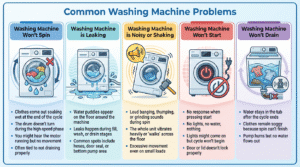
1. Washing Machine Won’t Spin
Clothes come out soaking wet at the end of the cycle. The drum doesn’t turn during the high-speed phase. You might hear the motor running but no movement. Often tied to not draining properly.
2. Washing Machine is Leaking
Water puddles appear on the floor around the machine. Leaks happen during fill, wash, or drain stages. Common spots include hoses, door seal, or bottom pump area.
3. Washing Machine is Noisy or Shaking
Loud banging, thumping, or grinding sounds during spin. The whole unit vibrates heavily or “walks” across the floor. Excessive movement even on small loads.
4. Washing Machine Won’t Start
No response when pressing start, no lights, no water, nothing. Lights might come on but cycle won’t begin. Door or lid doesn’t lock properly.
5. Washing Machine Won’t Drain
Water stays in the tub after the cycle ends. Clothes remain soggy because spin can’t finish. Pump hums but no water flows out.
How to Fix These Common Washing Machine Problems
1. How to Repair a Washer That Will Not Spin
Begin by stopping the cycle and opening the lid or door to spread the laundry evenly. Bulky items like towels, jeans, or blankets often bunch up on one side while wet, which activates the washer’s balance sensor and halts spinning. When the load seems fine, look for error codes on the panel, many LG, Samsung, or Whirlpool machines display codes that lead straight to the fault, such as a lid switch failure or motor issue. Ensure the drain isn’t actually the problem, try a drain-only cycle or check the hose for bends, clogs, or blockages.
With top-loaders, listen carefully for a click as you shut the lid, if absent, the lid switch may be defective and require replacement. On older units, a damaged drive belt may stop rotation; you can examine it by tipping the machine back (with assistance) and checking for cracks or looseness. Prevent overloading later by keeping loads near three-quarters full to limit strain on the entire system. These steps fix most no-spin problems fast.
2. How to Repair a Washing Machine That Leaks
Start by identifying where the water is escaping, whether it’s from the back, front, underneath, or only at specific points in the wash cycle. If water appears at the back while the washer fills, inspect the inlet hoses for splits, loose connections, or rust, tighten fittings or swap out the hoses (an inexpensive maintenance task recommended every 3–5 years). With front-load washers, leaks often come from the door seal, clean the rubber gasket regularly, remove trapped lint or debris, and run an empty hot cycle with white vinegar or a washer cleaner to reduce mold buildup.
Leaks from the bottom usually point to the drain pump or tub seal; unplug the washer, remove the lower front panel, and look for cracks, loose clamps, or obstructions. Using too much detergent or overfilling the drum can create excess suds that spill out, use HE detergent and measure carefully. Keep the washer level to reduce vibration that can loosen parts over time. Most washer leaks are resolved with these simple inspections.
3. How to Fix a Noisy or Shaking Washing Machine
The most common cause of excessive noise or movement is an unbalanced load. Pause the cycle, open the washer, and spread clothes evenly around the drum. When washing a single bulky item, add a few towels to help stabilize the load. Overloading increases vibration, so avoid filling the drum completely.
Next, check that the washer is level. Place a level on top and adjust the feet at the corners using a wrench until the machine sits firmly without rocking.
On uneven floors, anti-vibration pads placed under the feet can significantly reduce shaking.
For front-load washers, worn shock absorbers or suspension rods may allow the drum to move too freely during spin cycles. After unplugging the machine, pull it forward and inspect these parts for cracks, leaks, or looseness. Persistent grinding or rumbling noises, even when empty, may indicate worn bearings or a failing belt, which typically require professional repair. In most cases, proper loading and leveling restore quiet operation.
4. How to Repair a Washing Machine That Won’t Start
Start with the basics by checking the power supply, confirm the plug is pushed in securely and the outlet is working by testing it with another device, such as a lamp or phone charger. Next, try resetting the washer by unplugging it for 5–10 minutes; this simple step often clears minor electronic glitches on brands like LG, Samsung, and GE. When closing the door or lid, listen closely for a clicking sound, the latch must lock fully before the machine will run, so wipe around it if dust, lint, or detergent residue is preventing a proper seal.
Another common issue is the child lock or control lock feature, look for a padlock icon on the control panel and press and hold the assigned button (usually for three seconds) to disable it. If an error code appears, write it down and check the user manual or search the model number online to identify the issue. If the control panel lights up but the cycle still won’t start, the problem may be a faulty start button or control board, which typically requires professional repair. In many cases, these quick checks get the washer running again.
5. How to Repair a Washing Machine That Won’t Drain
Start with the drain filter, nearly all front-loading washers have one tucked behind a small access panel at the lower front. Lay a towel on the floor, open the panel, slowly twist out the filter, and remove trapped lint, coins, hair, or small objects; rinse it well and reinstall it securely. Next, inspect the drain hose to ensure it isn’t bent, flattened, or shoved too far into the standpipe, the hose should sit about 24–36 inches high to allow proper water flow.
If you hear the pump humming but see no drainage, debris may be lodged inside the pump itself. Unplug the washer, then carefully tilt it back or remove the bottom panel (get assistance if the unit is heavy) to check for blockages. For top-loading machines, a defective lid switch can also stop draining because the washer believes the lid is still open. Cleaning the filter every few months helps prevent repeat problems. Simple upkeep like this stops most drainage failures before they start.
FAQs of common washing machine problems and how to fix them.
Q1. What is the most common washing machine failure?
Not draining tops the list. Lint, coins, hair, and small items clog the pump filter or drain hose. Most front-loaders have an easy-access filter at the bottom front, clean it every few months and you’ll avoid standing water in the tub.
Q2. Why does my washing machine smell bad?
Mold and mildew love the warm, damp environment inside the drum and door seal, especially if you leave wet clothes sitting or close the door right after use. Run a hot empty cycle with a cup of white vinegar or a dedicated washer cleaner monthly, wipe the seal dry, and leave the door cracked open between washes.
Q3. Why is the washing machine shaking or making loud noises?
Usually an unbalanced load, clothes clump to one side when wet. Pause, redistribute evenly, and avoid washing single heavy items alone. Also check that the machine is level, adjust the feet if it’s rocking.
Q4. Why won’t the washer door open?
Many models lock the door during the cycle for safety. If water is still inside or the cycle hasn’t fully finished, it stays locked. Wait 5–10 minutes after the cycle ends. If it’s stuck longer, check for child lock or reset by unplugging for a few minutes.
Q5. What causes washing machines to break most?
Overloading is a major culprit, it stresses bearings, belts, and the motor. Always follow the load capacity guideline. Skipping maintenance like filter cleaning also leads to early failures.

Leave a Reply